Yolo Food Bank

R3 is providing the Yolo Food Bank with assistance to support the Yolo Food Bank’s efforts to expand its capacity by 50% and assist in the development and execution of a Distribution and Sourcing Plan to secure and distribute an additional 2+ million pounds of healthy food annually.

R3’s primary tasks for this engagement are as follows:

  • Initial evaluation of the Yolo Food Bank’s programs and services, current sources of food, and its Partner Agencies’ operations, capacities and other available relevant data;
  • Operational Review of the Yolo Food Bank:
    • Assessing key aspects of Yolo Food Bank’s operations; and
    • Determining if, and under what conditions, additional capacity could be increased to more than the planned 50% capacity increase if necessary;
  • Food Sourcing Assessment:
    • Assessing the Yolo Food Bank’s current sources for food;
    • Projecting the amount of additional pre-consumer edible food in Yolo County that is currently disposed from farms, manufacturing/wholesale sources, and consumer-facing businesses;
    • Projecting the total available SB 1383 Tier 1 and Tier 2 edible food, and percent of that total currently captured;
    • Developing a Sourcing Plan to secure 2 million additional pounds of food annually.
  • Partner Agency Capacity Assessment & Distribution System Assessment:
    • Assessing the capacity that exists within the Partner Agency network based on existing staffing and resources (number of additional meals per day that can be distributed if available); and
    • Assessing and documenting the geographic need within Yolo County and for each willing Partner Agency.

R3 is also assisting the Yolo Food Bank in maintaining compliance with the requirements of SB 1383 related to Edible Food Recovery Services and Organizations, as well as SB 1383 reporting requirements placed in edible food generators.

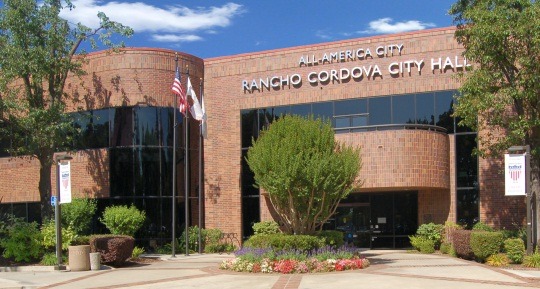
Rancho Cordova

Rancho Cordova is one of R3’s longest-standing clients—a partnership that began in 2004 and continues strong today. Over the past two decades, we’ve earned the City’s trust by consistently delivering reliable guidance through California’s constantly evolving waste regulations. This enduring relationship reflects the confidence City leadership has in our team’s expertise and our deep understanding of their community’s unique needs. We’ve worked alongside multiple city managers and staff transitions, providing the continuity and institutional knowledge that allows the City to adapt to new requirements without disrupting service to residents.

We handle the full spectrum of waste program management—from creating public outreach materials and updating ordinances to reviewing franchise agreements and monitoring hauler compliance. Our team develops branding, website content, social media posts, and educational guides that help residents and businesses understand new recycling requirements in plain language. We also work behind the scenes to identify which commercial generators must comply with state laws, verify their participation, and coordinate with local food recovery organizations to redirect edible food from landfills. This combination of public education and technical enforcement ensures high participation rates and regulatory compliance.

Our financial oversight includes conducting annual rate reviews to verify that hauler costs are reasonable and that residents pay fair prices for collection services. We review hauler reporting, evaluate contract amendments, negotiate service terms, and provide recommendations that balance quality service with cost control. We’ve helped the City update its waste hauler contracts and municipal code to incorporate new state requirements while protecting the City’s interests and maintaining good relationships with its service providers.

Twenty years of collaboration has made us an extension of the City’s team. Rancho Cordova trusts us to manage complex regulatory requirements, represent their interests in hauler negotiations, and provide honest guidance on difficult decisions. This partnership has resulted in streamlined operations, successful grant applications, and consistent compliance with state mandates—all while allowing City staff to focus on broader community priorities knowing their waste programs are in capable, experienced hands.

City of Merced

R3 assisted the City of Merced with updating its solid waste and recycling rates following the repeal of a local utility tax that had previously funded waste programs. When the tax was eliminated in January 2018, the city needed to restructure its rate system to maintain service levels while complying with California’s strict Proposition 218 requirements for how municipalities can charge residents for waste collection. Building on a rate model we developed for Merced in 2014, our team calculated new rate adjustments that would cover the revenue gap and meet evolving state recycling mandates. Our work included analyzing whether additional revenues were necessary, developing multiple rate scenarios, and conducting surveys of comparable cities to ensure Merced’s pricing remained competitive.

The result was a transparent, Excel-based financial planning tool that allows the city to project revenues and expenses on a cost-of-service basis over a five-year period. This model helps Merced plan for future rate adjustments, capital improvements, and operational changes while maintaining compliance with both Proposition 218 and California’s expanding waste diversion requirements. We also reviewed the city’s municipal code to identify updates needed for new state laws on commercial recycling, organics collection, and food waste reduction. This comprehensive approach gave the city financial stability for its waste programs and a clear roadmap for adapting to future regulatory changes.

Since 2016, R3 has been engaged by the County of Los Angeles (County) Department of Public Works to audit monthly facility and franchised hauler payments and tonnage reports required by the County. These audits are being conducted pursuant to Los Angeles County Code Chapter 20.88, which requires that all disposal sites, transfer/processing stations, or waste exporters in the County remit a fee based upon the tons or cubic yards of solid waste received, collected, conveyed, or hauled during a calendar month.

The County’s goal for this engagement was to confirm and/or correct the facility and hauler fee payments and reported tonnages. To that end, R3 was contracted to conduct approximately 48 facility and hauler audits annually over the course of four (4) years. R3 reviewed the accuracy of solid waste management tonnage fees remitted to the County by disposal sites, transformation facilities, transfer/processing stations, and/or waste exporters operating in the County (4 per month);

To accomplish the County’s objectives, R3 performed the following tasks:

  • Managed the logistics and communications between County and operator/franchisee staff for monthly verifications and site visits;
  • Notified the County Contract Manager of any issues related to the cooperation of operators/franchisees;
  • Provided advance notice to each operator/franchisee of documentation required for review at the confirmed date and location, covering the entire verification review period;
  • Conducted scheduled on-site operator/franchisee staff interviews to gain an understanding of operations and internal tracking procedures and confirmed that the operator/franchisee provided all required documents and records necessary for verification;
  • Reviewed and analyzing the required documents and records in order to verify accuracy of fees, tonnages, and other required elements, and identified possible underpayments or overpayments, if any;
  • Worked with each operator/franchisee to clarify any inconsistencies between R3’s calculated values and the values submitted by the operators/franchisees;
  • Provided the County Contract Manager with paper and electronic copies of the required documents for each verification; and
  • Conducted all work necessary to the completion of the Findings Report for each verification and submits it to the County Contract Manager within 60 calendar days of each site visit.

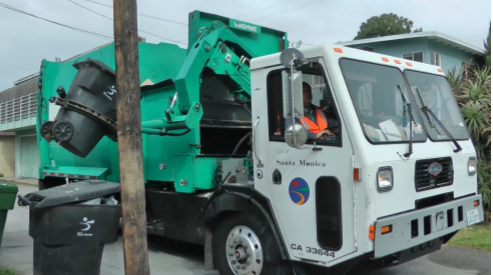
R3 conducted a comprehensive review of Santa Monica’s waste collection and recycling operations to help the city improve efficiency, maintain fair rates, and advance toward its ambitious zero waste goals. Our team analyzed how the City’s Resource Recovery and Recycling Division operated—from staffing levels and equipment to service routes and customer interactions. Through detailed interviews with City staff and residents, we identified opportunities to enhance productivity, safety, and long-term sustainability while ensuring the division had the resources needed to serve the community effectively over the next decade.

A critical part of our work involved protecting ratepayers by examining the City’s billing systems and rate structures. We audited billing records to verify accuracy and compared Santa Monica’s customer billing technology to industry standards used by private haulers. Since the City used systems not specifically designed for solid waste collection, we evaluated whether upgrades could improve service and reduce errors that affect residents. We also conducted a detailed rate study to confirm that current fees covered actual costs and developed a 10-year financial model that allows the City to plan for capital investments, operational changes, and new programs without unexpected rate increases.

Our analysis directly supported Santa Monica’s Zero Waste goals by identifying the most cost-effective strategies to increase diversion from landfills. We evaluated current programs and recommended new initiatives that would move the city closer to achieving 95% waste diversion by 2030. This included assessing opportunities for enhanced recycling, organics processing, and community engagement. We compared how other comparable communities managed the financial impacts of ambitious environmental programs, giving Santa Monica proven strategies that balanced environmental leadership with fiscal responsibility.

Throughout this engagement, we facilitated robust community outreach to ensure residents understood how waste services were funded and what changes might be coming. We developed materials for the Zero Waste Plan and Rate Study that translated complex technical and financial information into plain language. Our goal was to provide Santa Monica with clear options and recommendations that served both the City’s environmental vision and its residents’ need for reliable, affordable waste services. By taking a data-driven approach, we helped the City make informed decisions that would improve operations, achieve ambitious diversion targets, and maintain public trust in how ratepayer dollars are used.

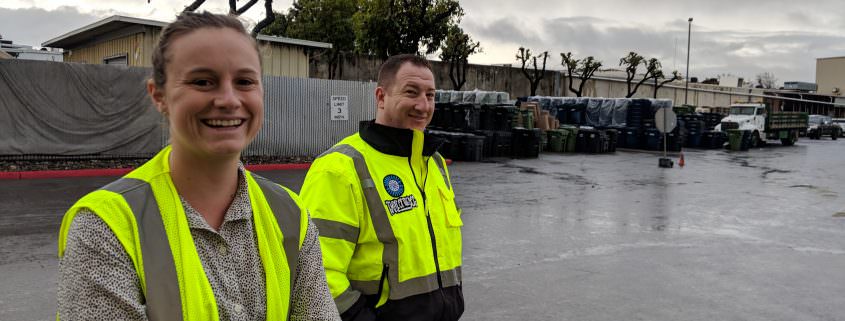
MTWS Performance Review for Los Altos - Project Analysts Claire Wilson and Ryan Calkins

Performance Review

R3 was engaged by the City of Los Altos (City) to conduct a Performance and Billing Review of Mission Trail Waste Solutions (MTWS) as included under their Collections Service Agreement (Agreement) to provide solid waste, recycling, and organic collection services for the City. R3’s high level review of MTWS consisted of two main tasks: a performance review and a financial compliance assessment. The primary goal was to determine MTWS’ compliance with the applicable terms and conditions of the Agreement, review the effectiveness of current operations; and identify opportunities for program improvement.

R3 worked with MTWS management and City staff to assess MTWS’ compliance with the reporting requirements and performance standards of the Agreement, as well as verify customer billing rate calculations and service levels, franchise fee calculations, and reported diversion percentages.

R3 utilized a variety of methods in the execution of the performance review, including analysis of relevant documents, on-site and field observations, and interviews. The Performance Review addressed the following major aspects of MTWS’s operations:

  • Collection Service Agreement Compliance Review;
  • Collection Operations Review;
  • Management and Administration Review;
  • Vehicle and Equipment Maintenance, Repair and Replacement Review;
  • Customer Service Review (including customer feedback);
  • Monthly, quarterly and annual report assessment;
  • Diversion Programs, Performances and Good Faith Efforts; and
  • Outreach and Education Services.

R3 conducted the financial compliance assessment to determine that customers are being charged the proper service rate based on their service level; service rate revenues are properly recorded and accounted for by the contractor; franchise fees are properly calculated, paid and received. R3 conducted three tests to accomplish this goal:

  • Test of Subscribers to verify that service subscribers are billed the correct rate for the level of service provided;
  • Test of Revenue Transactions to verify that the billed amounts to City residents and businesses, and the corresponding payments received are properly recorded in the MTWS billing and accounting systems; and
  • Test of Franchise Fee Transactions to verify that the franchise fees are calculated correctly, and based on the correct level of recorded revenues.

Our review found that MTWS is in compliance with the vast majority of the Agreement’s requirements. Collections are performed in a safe, courteous, and cleanly manner; coordination between the drivers, customer service, shop, and management is facilitated by an effective system of work orders; fleet maintenance operations and vehicles have consistently received satisfactory ratings from the California Highway Patrol; and MTWS is operating a sophisticated and professional customer service operation.

We determined that the most significant area for improvement relative to the Agreement’s terms and conditions is in outreach and education, which is not being performed according to the Agreement’s requirements.

Project benefits include:

  • Verification of MTWS’ compliance with the vast majority of the Agreement’s provisions;
  • Recommendations for MTWS’ improved compliance with the existing requirements of the Agreement regarding meeting reporting requirements, outreach and education activities, and paying the City franchise fee and administrative fees; and
  • Recommendations for revisions to the Agreement with regards to HHW collection services, rate requirements, and the billing schedule.

High Diversion Planning

R3 has been working with the City of Los Altos (City) since 2010, when we were originally engaged to provide procurement assistance resulting in the award of the Franchise Agreement (Agreement) with the City’s current hauler, Mission Trail Waste Systems (MTWS), that requires 78% diversion of franchised waste.

In service of our ongoing diversion support for the City, R3 has recently:

  • Completely revised the City’s Solid Waste Ordinance to align with the Agreement with MTWS, facilitated complete subscriber compliance with two State of California Assembly Bills (AB), AB 341 (mandatory multi-family and commercial recycling) and AB 1826 (mandatory commercial organics diversion), and facilitated increased diversion of recyclables and organics from commercial, industrial, and multi-family waste generators;
  • Undertaken an SB 1383 preparedness exercise in which we identified opportunities for the City to obtain needed support from MTWS in complying with the regulations;
  • Assisted the City in identifying enforcement thresholds for mandatory recycling and organics service: drafting enforcement letters which include notification of state law for generators covered under AB 341 and AB 1826, exemption forms, and a self-haul tonnage reporting form; and site visits to covered generators to encourage compliance;
  • Reviewed implementation of services in the field, including lid-flip assessments of waste from the top 50 generators in the City, as well as an assessment of MTWS’s outreach and education pertaining to increased diversion of recyclables and organics;
  • Developed a technical assistance plan and framework in support of the City’s commitment to providing diversion-related technical assistance and outreach;
  • Revised the City’s Construction and Demolition (C&D) Debris ordinance in alignment with CALGreen, establishing a system of facility certification;
  • Certified facilities and revised the City’s mandatory building checklist to include the certified facilities and other approved means of compliance such as deconstruction and purchase of a debris box from the City’s franchised hauler;
  • Conducted a street maintenance impact fee study for refuse vehicles used in the City; and
  • Completed the City’s Electronic Annual Report to CalRecycle for the reporting years 2016-2019.

R3 has also been engaged to assist the City with contract extension negotiations with MTWS, which includes support for some SB 1383 requirements, including universal roll-out of organics service to all businesses in the City.
 

R3 Consulting Group Now Offers:

Disaster Debris Management Planning Assistance to California Cities

No one is ever completely ready to handle a natural disaster, but with our help, you can avoid spending unnecessary funds, resources and time in the event of a disaster. We specialize in creating disaster debris management plans that are unique to your community, meaning you’ll have a plan in place when you need it most. Not only that, but municipalities with disaster debris management plans will be prepared in the event of a disaster, meaning time and energy are maximized, along with potential for FEMA reimbursement if protocols are followed. Let us help you navigate through the complicated process of disaster debris planning and make sure your FEMA reimbursement dollars are maximized.

Last month FEMA extended its Alternative Procedures Pilot Program which allows for up to an extra 2% of federal cost share reimbursement on money spent.  The opportunity to participate in this pilot program will be available through June 2018.  There is no better time than now to start planning.

Once we complete your plan and it is reviewed by FEMA for this program, the municipality will be eligible for this additional 2% reimbursement – money that you would have otherwise been spent out of pocket if no plan was in place.

Our plans are:

  • CalOES Approved
  • FEMA Approved
  • Guaranteed to participate in the Public Assistance Alternative Procedures Pilot Program (time dependent)

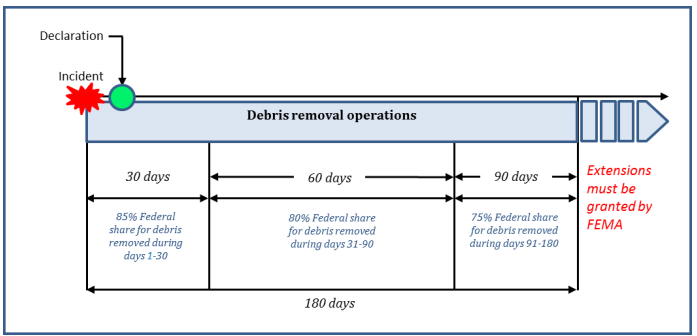
FEMA timeline of disaster reimbursement

(Above: FEMA timeline of disaster reimbursement)

More About Our Process

We will consider:

  • The type of disaster(s) that may potentially occur in your community
  • Your staffing levels and who would play certain roles when a disaster occurs
  • Your opportunities for procuring various contracted disaster debris management services
  • Potential sites in your limits that could be used for temporary debris removal and storage
  • Public information examples

Our process includes:

  1. Meeting with you to obtain base level data and confirm expectations of our services
  2. Providing the jurisdiction with a Draft 1 disaster debris management plan (DDMP)
  3. Reviewing the draft DDMP with the jurisdiction
  4. Providing the draft to CalOES, who will review the plan for completeness
  5. Revising the draft based on CalOES comment and provide a new draft to CalOES (this may take multiple iterations)

CalOES will forward the draft plan to FEMA once it has approved the plan. Once FEMA has approved the plan, you’re all set!

DDMPs are essential for:

  • Saving time and money
  • Having a quick and effective response to and preparation for a disaster
  • More efficient use of limited resources, including staff time

“Congratulations – that was an awesome plan. It was the best one I’ve ever reviewed.”   – Melinda Stehr, CalOES

Using our combined experience developing high diversion franchise agreements, designing state-of-the-art, community-based social marketing and outreach methods, and evaluating the effectiveness of solid waste diversion programs throughout California, R3 collaborated with our subconsultant, Cascadia, to prepare the Phase 2 Strategic Plan for High Diversion for the City of Livermore (City). R3’s project approach moved beyond eliminating barriers to diversion by incentivizing achievement of high diversion goals for all parties, including solid waste haulers, processors, and generators. Phase 2 built upon the City’s prior success by enhancing current generator-focused programs and requiring haulers of solid waste to share in both the responsibility and reward for diverting waste from landfills. High diversion program options were assessed based on what would cost effectively divert the most tons from disposal.

Through observation of select diversion programs in the field, interviews with the City, LSI, StopWaste and select waste generators, as well as review of detailed tonnage reports and subscription levels, R3 developed a high-level baseline analysis to measure the effectiveness of current diversion programs. Building on this analysis, R3 developed a recommended set of programs with the greatest potential of diverting waste from landfills during – and beyond – the five-year planning horizon. R3 created a set of recommendations that focus on ways in which the City can enhance the effectiveness of current programs, as well as develop new programs to cost-effectively increase diversion for the City.

Additionally, R3 estimated the amount of additional diversion that could be realized by each of the recommended new programs and estimated the cost for each program and the cost per ton that each program will divert. R3 also performed a high-level evaluation of the relationship between LSI’s rate structure and successful diversion behaviors.

Project benefits the City gained include the following:

  • Identification of opportunities to encourage and reward achievement of high diversion goals for all stakeholders;
  • Strategic planning for higher diversion grounded in a data-driven approach;
  • Pursuit of diversion opportunities that most effectively move tons out of landfills per dollar spent; and
  • Responsibility and reward for diverting waste from landfills is shared between the City and its franchised waste hauler.