
Monterey County - Solid Waste Flows

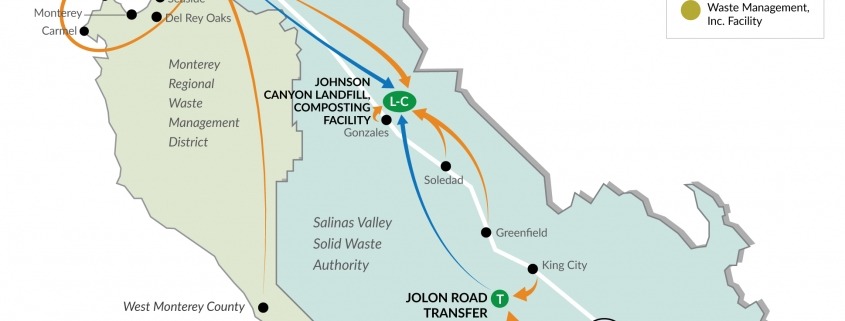
From 2014-2015, R3 was engaged by the County of Monterey (County) to evaluate and analyze its Solid Waste Management System, with the objective of developing an integrated regional approach as an alternative to the existing “split” between the two sub-regional solid waste management agencies. R3’s primary goal was to develop options to provide an efficient solid waste system to the entire Monterey region in a way that protected public health and the environment, provided benefits to all rate-payers, was committed to the highest and best use of materials, was adaptable and responsive in managing materials, and ensured that services were accessible to all customers.

R3’s work efforts included modeling tonnage flows between each community, transfer stations, processing facility and disposal facilities to determine the most environmentally sound and cost-efficient manner to manage solid waste on a regional basis. The modeling efforts addressed costs, GHG reductions, increasing diversion from landfill, closure of landfills, and location of transfer stations. The study’s results were presented in a series of regional workshops that facilitated the collaboration between all parties involved to remove barriers that previously had undermined cost-effective regional efforts to benefit all ratepayers. to identify and develop a consensus on operational, financial, political, and legal issues as alternatives to the status quo.

Clients of this regional engagement included the County of Monterey, Monterey Regional Waste Management District, Salinas Valley Solid Waste Authority, Pebble Beach Community CSD and the cities of Carmel-by-the-sea, Del Rey Oaks, Gonzales, Greenfield, King, Marina, Monterey, Pacific Grove, Salinas, Sand City, Seaside and Soledad.

Chico

In 2014, R3 developed a franchise system of solid waste collection for the City of Chico (City) to replace the City’s existing open-market permit system. Under the existing system, solid waste subscription was not mandatory, commercial and multi-family dwelling (MFD) rates were unregulated, and the City provided many services generally provided for free by a hauler under an exclusive franchise agreement. For this engagement, R3 developed and helped implement an improved solid waste collection system that fulfilled the City’s environmental goals and complied with State regulations, including AB 939, AB 341, and AB 1826.

Through R3’s facilitation, the City entered into negotiations for a new franchised collection system with its two permitted haulers, North Valley Waste Management (WM) and Recology Butte Colusa Counties (Recology), with the franchising costs fully reimbursed by the haulers. R3 worked extensively with the City and its permitted haulers to develop and analyze future franchising options, including documenting the existing conditions of the City’s solid waste system, developing key terms and conditions of potential franchise agreements, and establishing operational zones and requirements for the new collection system.

R3 proposed a solid waste collection system with three collection franchise contracts: two exclusive Commercial/Multi-family service zones operated by Recology and WM, and one exclusive City-wide Residential service zone operated by WM. R3 assisted the City in the implementation of the new system, including developing deal points for the City and haulers, developing draft agreement language, negotiating the final agreements, and revising the City’s municipal code.

After successful negotiations, the new agreement went into effect in October 2017. Benefits included a 10% Franchise Fee, operation of previously City-provided services, and clearly defined diversion, service, and equipment requirements.

Project Description:

At the time of this engagement, the City’s solid waste collection was regulated through an open-market permit system, with unrestricted permits issued to North Valley Waste Management (WM) and Recology Butte Colusa Counties (Recology) to serve both residential and commercial accounts in the City. Both permits were set to expire on June 30th, 2019.

San Diego - Districting Study

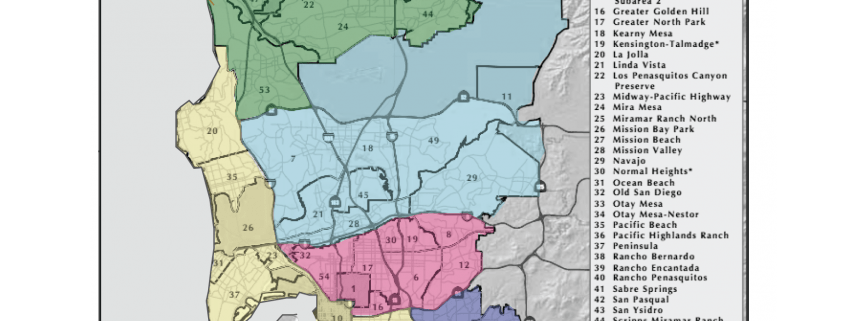
R3 was recently engaged by the City of San Diego (City) Environmental Services Department (ESD) to conduct a study that evaluated whether the ESD should implement a districted exclusive collection system for the diversion and disposal of commercial solid waste generated within the City. At the time of this project, the City regulated commercial solid waste generation under a non-exclusive commercial collection system, with 21 non-exclusive commercial Franchise Agreements (FAs) and nine franchise haulers competing for accounts throughout the City. Through the implementation of a “districted” system, the City would be organized into multiple service areas (districts) with a single hauler operating in each.

R3 had a wide range of responsibilities for this engagement, including, but not limited to performing the following tasks for the City:

  • Identifying and evaluating three alternative district configurations which the City could consider as starting points for defining boundaries in a new districted system;
  • Developing three different scenarios for implementation to present possible policy alternatives to the City;
  • Analyzing the issues identified in the Office of the City Auditor (OCA) in the August 2014 Performance Audit of ESD’s Waste Reduction and Recycling Programs both in terms of how other jurisdictions addressed these issues and their potential effect in the City of San Diego:
    • Potential to stimulate investment and innovation in recycling;
    • Customer service impacts;
    • Impact on street conditions and street maintenance costs;
    • Environmental impacts;
    • Impact on City’s ability to stabilize franchise and AB 939 fee revenues and monitor the accuracy of payments; and
    • Impact on long-term solid waste hauling competition.
  • Providing analysis on possible price impacts by conducting surveys on:
    • Rate and programs for cities in San Diego County;
    • Current commercial and multi-family rates in the City; and
    • Large California cities and other cities with exclusive commercial franchise systems.
  • Holding two public forums as an outreach program to discuss a districted exclusive collection system with haulers, interest groups and the general public; and
  • Making recommendations to the City in the case of implementation.

R3 ultimately found that adopting a districted exclusive collection system would produce many benefits, and accordingly made recommendations to the City regarding the implementation of such a system. These recommendations included specific details regarding the development of new FAs with exclusive franchised haulers to align with the City’s environmental goals, and a 3-district  option that maximized routing efficiency and reductions in traffic, air equality emissions, greenhouse gas emissions, and noise.

Lane County Facilities

R3 (with the assistance of Abbe & Associates and Blue Ridge Services) was engaged by Lane County (County), Oregon, with a three (3) phased master planning process: conducting an Operational Review, developing a Regional Strategic Master Plan, and developing Jurisdiction-Specific Action Plans. The County operates a series of 16 transfer stations, a large landfill and a special waste facility.

Phase I: Operational Assessment

R3 reviewed the operations and finances of Lane County’s landfill and transfer station system, and material recovery operations, and identified opportunities to improve the safety, cost, diversion, and overall system performance. Recommendations were very well received by Lane County and include: reconfiguring Lane County’s rates for material recovery facility residuals to provide more effective incentives to divert material, revising operations at the landfill and at the County’s central transfer station, and closing various rural transfer sites. The Phase I Operational Assessment Final Report was presented and well received by the County Board of Commissioners. A major goal was to identify at least $1.5 million in annual cost savings for the Division; R3’s recommendations are projected to save the County $1.8 million annually.

Phase II: Regional Master Plan

Phase 2 of the project involves conducting a needs assessment and developing a strategic Regional Master Plan, with the goal of achieving a Countywide diversion rate of 63%. The Phase II Regional Waste Master Plan involves identifying, evaluating and recommending programs and policy options, and projecting funding needs associated with the recommended Master Plan components.  R3 also led the stakeholder involvement process as part of Phase II. As part of the development of the Regional Master Plan, R3 designed the supporting stakeholder involvement process that included:

  • Developing a short- and long-range vision (initially working with Lane County staff, then with stakeholders);
  • Developing a communication plan to compile information and feedback from representatives of the various cities in Lane County, the private solid waste haulers and facility operators, non-profits, and residents and businesses; and
  • Conducting stakeholder engagement and outreach efforts (workshops, public meetings, publications, websites, etc.) to obtain feedback, ideas, and “buy-in.”
  • As part of this phase, R3 leveraged the County’s regional food recovery programs to develop recommendations for increased edible food recovery.

Phase III: Jurisdiction-Specific Action Plans

Phase III of the project involved working with the cities of Eugene and Springfield to develop jurisdiction-specific Action Plans to guide the implementation of solid waste management system polices, programs, and facilities in those jurisdictions that are aligned with the County’s Regional Master Plan.

Recently, R3 was selected to further assist the County with the following:

  • Drafting and executing waste disposal agreements with each of the incorporated cities that currently deliver their waste to the County’s waste management transfer station and landfill system;
  • Assessing  the pros and cons of establishing a countywide solid waste joint powers authority, and each of the jurisdiction’s level of interest in forming a JPA, and identify next steps; and
  • Drafting and negotiating a memorandum of understanding for coordinated county-wide solid waste management reporting requirements,;
  • Assess the pros and cons of the various collection system structures available to the County for the regulation of its private haulers in the Eugene-Springfield Urban Growth Boundary and the other more rural unincorporated areas of the County, and recommend a preferred structure
    based on the County’s objectives for its solid waste management system;
  • Drafting a performance-based high-recovery “model” franchise agreement, with private hauler input, that the County can use to regulate haulers within the County based on the preferred collection system structures determined above; and
  • Assisting the County with the executing performance-based high- franchise agreements with the private haulers operating in unincorporated Lane County.
Siskiyou County

R3 was engaged by Siskiyou County (County) Department of Solid Waste (Department) to assist with an Evaluation of the County’s existing solid waste system and the development of a Solid Waste Management Plan (Plan) in support of determining future disposal and recycling contracting methods that increase efficiencies and reduce costs.

R3’s objectives for this engagement involved conducting the following primary three tasks:

  • Formulating a specific strategy to extend the County’s existing contracts, and/or to conduct the competitive procurement of the County’s operation services;
  • Conducting a rate comparison and creating a Rate Model to develop a 10-year Rate Adjustment Plan that supports the long-term financial strength of the County’s Sanitation Enterprise Fund; and
  • Reviewing and providing actionable recommendations to enhance the efficiency and effectiveness of the County’s current collection, transfer and disposal systems.

Specifically, R3 reviewed and compared the County’s Transfer Station gate rate to those in similar rural counties, and providing a comparison of the County’s solid waste parcel fee to solid waste parcel fees in other counties in the State (Calaveras, El Dorado, Glenn, Kern, Modoc, Mono, Sierra and Trinity Counties).

R3 assessed the County’s overall solid waste management system to support the identification and realization of opportunities to increase the efficiency and reduce the cost of the Sanitation Enterprise Fund. R3 conducted a SWOT analysis to identify internal Strengths and Weaknesses, and external Opportunities and Threats to the County’s solid waste management system. To accomplish this, R3 worked with County staff on site, touring its facilities and observing its operations in order to comprehensively review the efficiency and effectiveness of the current collection, transfer and disposal systems, and develop meaningful recommendations for improvement.

To support the ongoing management of the Department’s finances, R3 also developed a recommended 10-year Rate Adjustment Plan to enable the County to maintain a positive annual net cash flow for the Sanitation Enterprise Fund, retire its current $6 million debt within a targeted time frame, and fund a new transfer station in Yreka. To do this, R3 created a simple Excel-based Rate Model which can be used to model various gate rate and/or parcel fee adjustments.

Carlsbad - Sustainable Materials Management Plan

R3, with subconsultant Cascadia Consulting Group,  was engaged by the City of Carlsbad (City) to develop a Sustainable Materials Management Plan (SMMP). The purpose of the SMMP was to identify specific policies and ordinances, programs and services, service provider contractual requirements, and facility capacity that Carlsbad should pursue to achieve its sustainable materials management objectives. The SMMP was organized into the following three phases:

  • Phase 1) Ensure compliance with all state solid waste regulations currently in effect.
  • Phase 2) Achieve regulatory compliance with all SB 1383 regulations.
  • Phase 3) Establish sustainable materials management systems throughout Carlsbad.

Implementation of Carlsbad’s SMMP and the completion of Phase 3 will result in the following:

  1. Sustainable materials management systems in all city government departments;
  2. Sustainable materials management systems throughout Carlsbad’s residential and commercial sectors, and public areas and venues; and
  3. Establishing the city as a leader in sustainable materials management.

The SMMP’s “actions” for each of the 3 Phases are presented in the context of the following three elements of sustainable materials management systems (life-cycle phases), with the major types of actions associated with each element noted:

  1. Upstream Design and Production – Designing and producing sustainable materials and products that have high post-consumer recycled content and contain no or minimal raw (virgin) materials, have no or limited packaging, are non-toxic, and are readily recyclable.
    • Major related actions include: Sustainable Procurement, Material Bans (Product Bans) | Disposal Bans, and Product Stewardship | Take Back Ordinances.
  2. Consumption and Use – Consuming and using sustainably produced materials and products in a manner that is consistent with the hierarchy of waste reduction, reuse, and recycling.
    • Major related actions include: Waste Prevention | Source Reduction, Material Reuse, and Sustainable Materials Market Development and Support
  3. End-of-Life Management – Maximizing diversion of materials and the production of post-consumer recycled content feedstock for upstream design and production of sustainable materials (i.e., closing the loop).
    • Major related actions include: Diversion Programs and Regional Advocacy and Support.

In support of city’s the end-of-life management objectives, it will need to negotiate changes to its existing collection contract and Palomar Transfer Station (PTS) operating contract, and/or draft new agreements and conduct competitive procurement processes for collection and transfer station services when the current contract terms expire. The City will also need to establish policies, enact or amend ordinances, and provide other support activities as deemed appropriate in support of its sustainable materials management objectives.

The SMMP has been well received by the City and its elected officials. The City’s planned next steps are the development and execution of a detailed Implementation Plan.

Yolo Food Bank

R3 is providing the Yolo Food Bank with assistance to support the Yolo Food Bank’s efforts to expand its capacity by 50% and assist in the development and execution of a Distribution and Sourcing Plan to secure and distribute an additional 2+ million pounds of healthy food annually.

R3’s primary tasks for this engagement are as follows:

  • Initial evaluation of the Yolo Food Bank’s programs and services, current sources of food, and its Partner Agencies’ operations, capacities and other available relevant data;
  • Operational Review of the Yolo Food Bank:
    • Assessing key aspects of Yolo Food Bank’s operations; and
    • Determining if, and under what conditions, additional capacity could be increased to more than the planned 50% capacity increase if necessary;
  • Food Sourcing Assessment:
    • Assessing the Yolo Food Bank’s current sources for food;
    • Projecting the amount of additional pre-consumer edible food in Yolo County that is currently disposed from farms, manufacturing/wholesale sources, and consumer-facing businesses;
    • Projecting the total available SB 1383 Tier 1 and Tier 2 edible food, and percent of that total currently captured;
    • Developing a Sourcing Plan to secure 2 million additional pounds of food annually.
  • Partner Agency Capacity Assessment & Distribution System Assessment:
    • Assessing the capacity that exists within the Partner Agency network based on existing staffing and resources (number of additional meals per day that can be distributed if available); and
    • Assessing and documenting the geographic need within Yolo County and for each willing Partner Agency.

R3 is also assisting the Yolo Food Bank in maintaining compliance with the requirements of SB 1383 related to Edible Food Recovery Services and Organizations, as well as SB 1383 reporting requirements placed in edible food generators.

Rancho Cordova

Rancho Cordova is one of R3’s longest-standing clients—a partnership that began in 2004 and continues strong today. Over the past two decades, we’ve earned the City’s trust by consistently delivering reliable guidance through California’s constantly evolving waste regulations. This enduring relationship reflects the confidence City leadership has in our team’s expertise and our deep understanding of their community’s unique needs. We’ve worked alongside multiple city managers and staff transitions, providing the continuity and institutional knowledge that allows the City to adapt to new requirements without disrupting service to residents.

We handle the full spectrum of waste program management—from creating public outreach materials and updating ordinances to reviewing franchise agreements and monitoring hauler compliance. Our team develops branding, website content, social media posts, and educational guides that help residents and businesses understand new recycling requirements in plain language. We also work behind the scenes to identify which commercial generators must comply with state laws, verify their participation, and coordinate with local food recovery organizations to redirect edible food from landfills. This combination of public education and technical enforcement ensures high participation rates and regulatory compliance.

Our financial oversight includes conducting annual rate reviews to verify that hauler costs are reasonable and that residents pay fair prices for collection services. We review hauler reporting, evaluate contract amendments, negotiate service terms, and provide recommendations that balance quality service with cost control. We’ve helped the City update its waste hauler contracts and municipal code to incorporate new state requirements while protecting the City’s interests and maintaining good relationships with its service providers.

Twenty years of collaboration has made us an extension of the City’s team. Rancho Cordova trusts us to manage complex regulatory requirements, represent their interests in hauler negotiations, and provide honest guidance on difficult decisions. This partnership has resulted in streamlined operations, successful grant applications, and consistent compliance with state mandates—all while allowing City staff to focus on broader community priorities knowing their waste programs are in capable, experienced hands.

City of Merced

R3 assisted the City of Merced with updating its solid waste and recycling rates following the repeal of a local utility tax that had previously funded waste programs. When the tax was eliminated in January 2018, the city needed to restructure its rate system to maintain service levels while complying with California’s strict Proposition 218 requirements for how municipalities can charge residents for waste collection. Building on a rate model we developed for Merced in 2014, our team calculated new rate adjustments that would cover the revenue gap and meet evolving state recycling mandates. Our work included analyzing whether additional revenues were necessary, developing multiple rate scenarios, and conducting surveys of comparable cities to ensure Merced’s pricing remained competitive.

The result was a transparent, Excel-based financial planning tool that allows the city to project revenues and expenses on a cost-of-service basis over a five-year period. This model helps Merced plan for future rate adjustments, capital improvements, and operational changes while maintaining compliance with both Proposition 218 and California’s expanding waste diversion requirements. We also reviewed the city’s municipal code to identify updates needed for new state laws on commercial recycling, organics collection, and food waste reduction. This comprehensive approach gave the city financial stability for its waste programs and a clear roadmap for adapting to future regulatory changes.

Since 2016, R3 has been engaged by the County of Los Angeles (County) Department of Public Works to audit monthly facility and franchised hauler payments and tonnage reports required by the County. These audits are being conducted pursuant to Los Angeles County Code Chapter 20.88, which requires that all disposal sites, transfer/processing stations, or waste exporters in the County remit a fee based upon the tons or cubic yards of solid waste received, collected, conveyed, or hauled during a calendar month.

The County’s goal for this engagement was to confirm and/or correct the facility and hauler fee payments and reported tonnages. To that end, R3 was contracted to conduct approximately 48 facility and hauler audits annually over the course of four (4) years. R3 reviewed the accuracy of solid waste management tonnage fees remitted to the County by disposal sites, transformation facilities, transfer/processing stations, and/or waste exporters operating in the County (4 per month);

To accomplish the County’s objectives, R3 performed the following tasks:

  • Managed the logistics and communications between County and operator/franchisee staff for monthly verifications and site visits;
  • Notified the County Contract Manager of any issues related to the cooperation of operators/franchisees;
  • Provided advance notice to each operator/franchisee of documentation required for review at the confirmed date and location, covering the entire verification review period;
  • Conducted scheduled on-site operator/franchisee staff interviews to gain an understanding of operations and internal tracking procedures and confirmed that the operator/franchisee provided all required documents and records necessary for verification;
  • Reviewed and analyzing the required documents and records in order to verify accuracy of fees, tonnages, and other required elements, and identified possible underpayments or overpayments, if any;
  • Worked with each operator/franchisee to clarify any inconsistencies between R3’s calculated values and the values submitted by the operators/franchisees;
  • Provided the County Contract Manager with paper and electronic copies of the required documents for each verification; and
  • Conducted all work necessary to the completion of the Findings Report for each verification and submits it to the County Contract Manager within 60 calendar days of each site visit.